
From Runway to Roadway: Why Japan’s Airport Shuttles Deserve an Upgrade
Japan’s airports are famously efficient, but when it comes to shuttle buses, travelers still face a clunky extra step: booking separately from their flights. Imagine if ANA or JAL let you reserve your airport bus seat right alongside your ticket—just like American Airlines or United do in the US. This commentary explores how Japan’s “limousine bus” services could evolve, making transfers smoother, destinations more accessible, and travel less stressful for both tourists and locals.
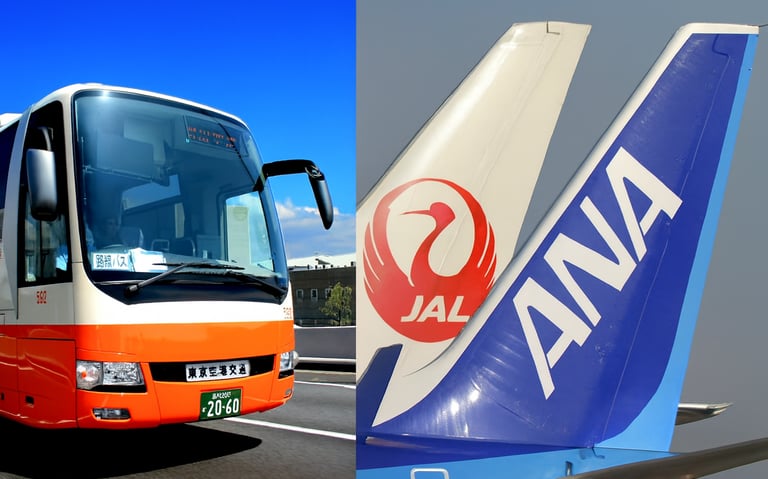
If there’s one thing Japan does brilliantly, it’s transportation. Trains glide in on the dot, planes take off with precision, and even the airport shuttle buses—those trusty “limousine buses”—are known for their reliability. But here’s the catch: while the buses themselves are punctual and well-coordinated, booking them still feels like stepping back in time.
Unlike in the US, where airlines like American and United let you book a connecting bus ride right on their websites (Philadelphia to Allentown, Denver to Fort Collins—yes, it’s treated like a flight!), Japan’s system keeps the bus separate. You book your flight, then you book your bus. Two transactions, two confirmations, and twice the hassle.
Now, to be fair, ANA and JAL already work closely with shuttle operators. They sync schedules, adjust frequencies, and even wait for delayed passengers—a small but very Japanese touch of hospitality. Frequent domestic travelers know this well: arriving in smaller prefectures often means a bus patiently idling outside, ready to whisk you away once you’ve cleared baggage claim. It’s a system built on trust and coordination, but not yet on convenience.
So what’s missing? Integration.
Imagine booking a Narita-to-Yokohama bus seat at the same time you book your flight from Singapore. Or reserving Osaka-to-Kobe transport with your ANA ticket, no extra clicks required. This isn’t just about saving time—it’s about making regional destinations more accessible. Tourists would find it easier to explore beyond Tokyo and Kyoto, while locals could enjoy smoother commutes without juggling multiple reservations.
The real opportunity lies in the less popular routes. Narita to Kanagawa, Haneda to Saitama, or even Kansai to Wakayama—these are places that could benefit from seamless connections. By embedding bus reservations into airline booking systems, Japan could unlock new travel patterns, encourage exploration of overlooked prefectures, and reduce the stress of transfers.
Of course, this would require study, coordination, and perhaps a bit of digital modernization. But if Japan’s transportation history has taught us anything, it’s that once the country commits to efficiency, it doesn’t do things halfway.
Until then, we’ll keep juggling our flight confirmations and bus tickets, secretly wishing that one day, booking a “flight” from Narita to Yokohama will be as easy as clicking “add shuttle.”